
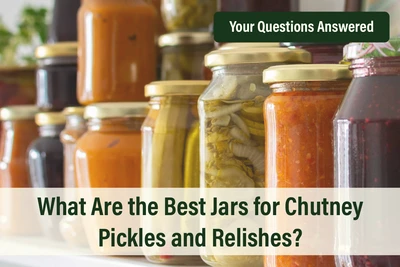
What Are the Best Jars for Chutney Pickles and Relishes?
Posted by The Wares Team on 12th Oct 2026
Quick answer: Choose a food-safe jar with an opening wide enough for the largest pieces in the recipe and a new, compatible lid with a vinegar-resistant lining. Smaller 190ml to 282ml jars suit chutneys and relishes; 480ml to 500ml jars are practical for larger pickles; very large jars are best reserved for recipes and processing methods designed for them.
Shop the relevant range Chutney and pickle jars | Jam and food jars | Replacement lids
Match the Opening to the Texture
The largest ingredient should pass through the neck without being forced. A narrow opening may be fine for smooth relish or sauce, but it makes chunky chutney, piccalilli and whole pickled onions harder to fill and serve.
Useful Formats in Our Range
| Format | Capacity | Useful for | Closure note |
|---|---|---|---|
| Deluxe panelled food jar | 190ml | Small chutney portions, gifts and tasting sets | Check the supplied lid specification |
| Chutney and sauce jar | 212ml | Chutney, relish and smooth sauces | 58mm lid |
| Square food jar | 282ml | Retail chutney and relishes with label panels | Check the supplied lid specification |
| Jam or pickle jar | 480ml | Larger pickles and family-size preserves | 70mm lid |
| Deluxe panelled food jar | 500ml | Chunky chutney, sauces and larger portions | 82mm lid |
Use a Lid Suited to Acidic Foods
Chutneys and pickles often contain vinegar, so the closure lining must be suitable for acidic products.All the lids we supply are heat-sealable and vinegar-proof. Use a fresh lid for products intended for long-term storage and inspect it before filling for dents, scratches, rust or damage to the sealing compound.
Follow the Recipe for Headspace and Processing
Do not use one headspace measurement for every chutney, pickle or relish. The correct space, fill temperature and processing method depend on the recipe, jar and closure. Follow a current, tested recipe and the jar and lid manufacturer's directions. A button that has pulled down confirms that a vacuum formed; it does not confirm that the food was processed safely.
For Home Preserving
Choose a jar size that will be used within the recipe's guidance once opened. Smaller jars reduce the time an open product remains in the fridge, while larger jars reduce the number of containers needed for a batch. Inspect every jar for chips or cracks before exposing it to heat.

For Retail Products
Repeatability matters as much as appearance. Confirm the usable label area, the filled weight, the number of jars per case and how the packed jar performs in transport. If the product contains allergens or is sold prepacked, check the current labelling rules that apply to the sales channel and location.
A square or panelled jar can provide a clean front label and a separate panel for ingredients, allergens and product information. Apply the label to a filled sample first, because the contents and fill line affect how the finished pack looks.
A Practical Buying Checklist
Before choosing your jars, it's worth checking a few important details:
- ✓ Can the largest ingredient pass easily through the neck?
- ✓ Is the jar suitable for the recipe's filling and processing method?
- ✓ Is the lid compatible and lined for acidic or vinegar-based food?
- ✓ Does the jar leave enough usable space for the complete label?
- ✓ Will the filled jar fit the chosen case, gift box or postal packaging?