
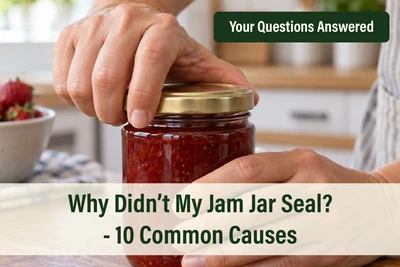
Why Didn’t My Jam Jar Seal? - 10 Common Causes
Posted by The Wares Team on 13th Oct 2026
Quick answer: Start by checking that the lid is new, undamaged and compatible with the jar, then inspect the jar rim for chips or food residue. Also check the recipe's headspace, fill temperature, processing method and cooling instructions. A jar that has not sealed should not be stored at room temperature.
Important: A vacuum indicates that the lid sealed; it does not prove that the food was safely processed. Always follow a current, tested recipe and the jar and lid manufacturer's directions.
Shop the relevant range Replacement lids | Our lid guide | Home preservation guidance
10 Reasons a Jar May Not Seal
1. The Lid Does Not Match the Jar
The diameter, lug or thread pattern and sealing surface all need to match. A lid that appears to fit may still be incompatible and fail under cooling or storage.
2. The Lid Was Reused or Damaged
A previously used sealing compound may not recover its original shape. Dents, scratches, rust and damage around the edge can also prevent full contact with the rim.
3. The Jar Rim Is Chipped or Uneven
Even a small chip can create an air path beneath the lid. Inspect the rim before every batch and retire damaged jars from preserving use.
4. Food or Moisture Is on the Rim
Jam, syrup, seeds or fibres can sit between the glass and the lid compound. Wipe the rim as directed by the recipe before fitting the lid.
5. The Headspace Is Wrong
Too little space can force food into the seal; too much can interfere with the process described by the recipe. Use the stated headspace for that product rather than a general rule.
6. The Fill Temperature Was Wrong
Hot-filled preserves need to be filled at the specified temperature. If the food or jar is too cool, the expected vacuum may not form and the glass may face greater thermal shock.
7. The Lid Was Applied Incorrectly
A loose lid may not seal correctly. Excessive force can distort the lid or sealing compound. Follow the closure supplier's directions; We advise firmly finger tight for its twist-off lids.
8. The Required Processing Step Was Missed or Changed
Changing the recipe, jar size, processing time or method can affect both sealing and safety. Preparing an empty jar and hot-filling it are not substitutes for a required heat-processing step.
9. The Lid Was Prepared the Wrong Way
Boiling, oven-heating or otherwise treating a lid contrary to its instructions can damage the sealing compound. Prepare jars and lids separately and follow the supplier's method for each.
10. The Jar Was Disturbed While Cooling
Moving, tilting, retightening or stacking a jar before it has cooled can interfere with a seal as it forms. Leave the jars upright and undisturbed for the stated cooling period.
What to Do With an Unsealed Jar
Do not put it into room-temperature storage. If the jar has just been processed, follow the tested recipe's guidance for refrigeration, freezing or reprocessing. Research-based home-canning guidance permits reprocessing only within 24 hours, using a clean jar, a new lid and an up-to-date tested hot-pack recipe. Quality may be reduced.
If the first batch did not follow a tested recipe, a seal is not evidence that the food is safe. If you are uncertain about the process or see spoilage, leakage, a bulging lid, mould, unusual bubbles or an off smell, do not taste the contents.
Look for a Pattern
One failed jar can point to an individual lid or damaged rim. Several failures suggest a shared cause, such as incompatible lids, incorrect preparation, fill temperature, headspace or processing. Record the jar, lid batch and method so you can identify what changed before the next run.